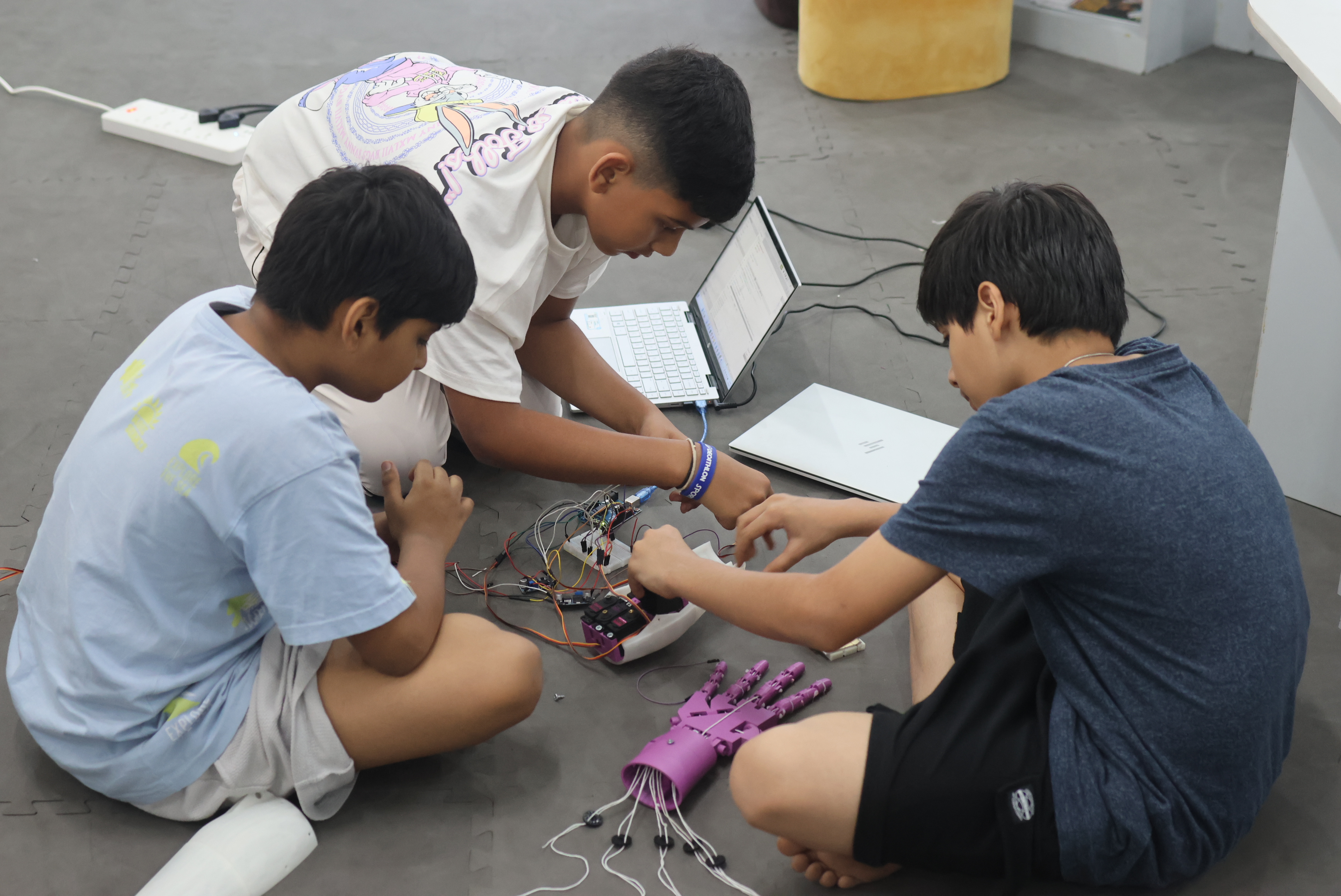
Your child already uses AI every day. The question is whether they are using it, or whether they understand how it actually works.
That gap, between a kid who consumes technology and one who can build with it, is exactly what AI classes for kids in Gurugram are designed to close.
This guide covers everything a parent in Gurugram needs to know before enrolling their child: what is actually taught in a good AI program, what age makes sense to start, what to watch out for in the market, and how to find a program that does more than just scratch the surface.
What Do AI Classes for Kids Actually Teach?
This is the first thing most parents get wrong. They assume AI classes mean typing prompts into ChatGPT or watching YouTube videos about robots. A real AI program teaches something far more useful: how machines learn, how data becomes decisions, and how to build systems that can do things on their own.
At a solid program, a 12-year-old will work with actual machine learning libraries. They will train a classification model, understand why it fails, tweak the dataset, and run it again. A 9-year-old will learn the logic behind decision trees using physical examples before they ever touch a computer. The concepts are the same ones used in industry. Only the complexity changes.
A strong AI curriculum for kids typically covers four areas:
- Prompting and Generative AI: Learning how to communicate with AI tools effectively, including ChatGPT APIs, image generation, and text pipelines. This is the entry point for younger students.
- Core AI and Logic: Rule-based systems, decision trees, search algorithms, and basic natural language processing. Understanding how machines reason.
- Machine Learning: Working with real datasets using tools like pandas and scikit-learn. Training models, analyzing results, understanding predictions.
- Agentic AI Systems: For older or advanced students: building AI that plans and executes multi-step tasks. This is where tools like LangChain and RAG pipelines come in.
If a program you are evaluating cannot tell you specifically what tools and concepts their students work with, that is a red flag.
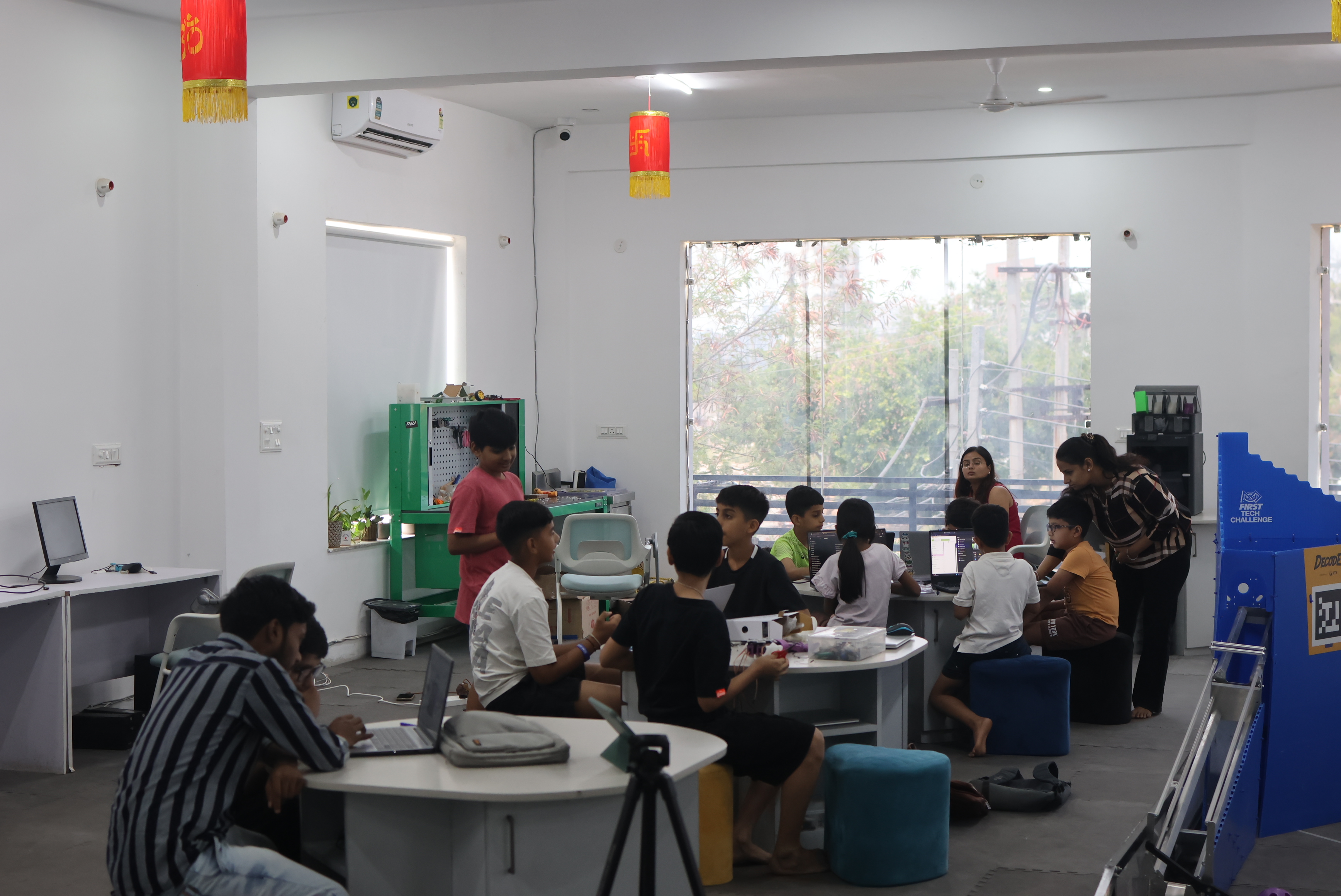
What Age Should Kids Start AI Classes in Gurugram?
There is no single right answer, but here is a useful framework.
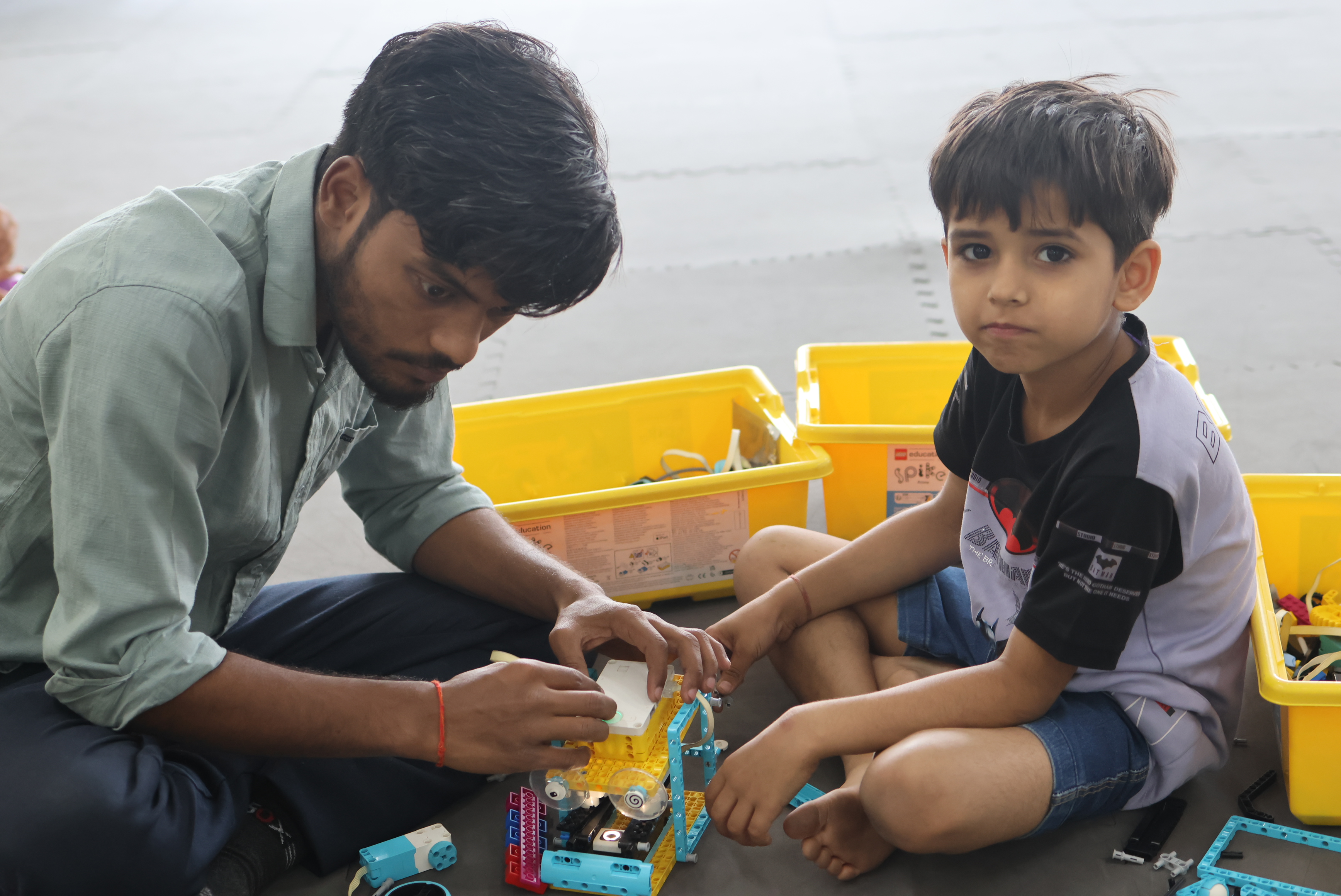
Ages 6 to 12 are the best time to build foundations. Kids at this stage learn pattern recognition, logical thinking, and cause-and-effect reasoning through hands-on activities. They do not need to code ML models yet. They need to understand why a machine makes certain decisions and how data shapes outcomes. Games, sorting exercises, and simple automation tasks work well here.
Ages 12 and up is when real AI and ML work begins. A 13-year-old can understand supervised learning, write Python code to process a dataset, and debug a model that is producing wrong outputs. This is also the age where students can start working on projects they can show to colleges or competition judges.
Starting early matters less than starting at the right level. A 14-year-old who starts from zero in a well-structured program will outperform a 9-year-old in a program that moves too fast. Match the program to where your child actually is, not where you want them to be.
Why Most AI Programs for Kids Fall Short
Gurugram has no shortage of classes that use the word AI in their name. Very few of them teach it meaningfully.
The most common problem is surface-level content. The student learns to use tools but never understands the underlying logic. They can run a ChatGPT prompt, but they could not explain what a token is, why outputs hallucinate, or how to evaluate a model's accuracy. This creates a false sense of competence that collapses under any real challenge.
The second problem is copy-paste learning. Students follow a tutorial, produce a result that looks impressive, and learn almost nothing transferable. True learning requires building something that fails, figuring out why it failed, and fixing it. That process takes more time and more skilled instructors.
The third problem is age-inappropriate content. Cramming gradient descent into a session designed for 10-year-olds does not produce understanding. It produces anxiety and the conclusion that AI is too hard for them. The reverse is also true: giving 15-year-olds toy-level activities wastes their time and their potential.
When evaluating any program, ask them one simple question: what does a student actually build by the end of the course? If the answer is vague, you have your answer.
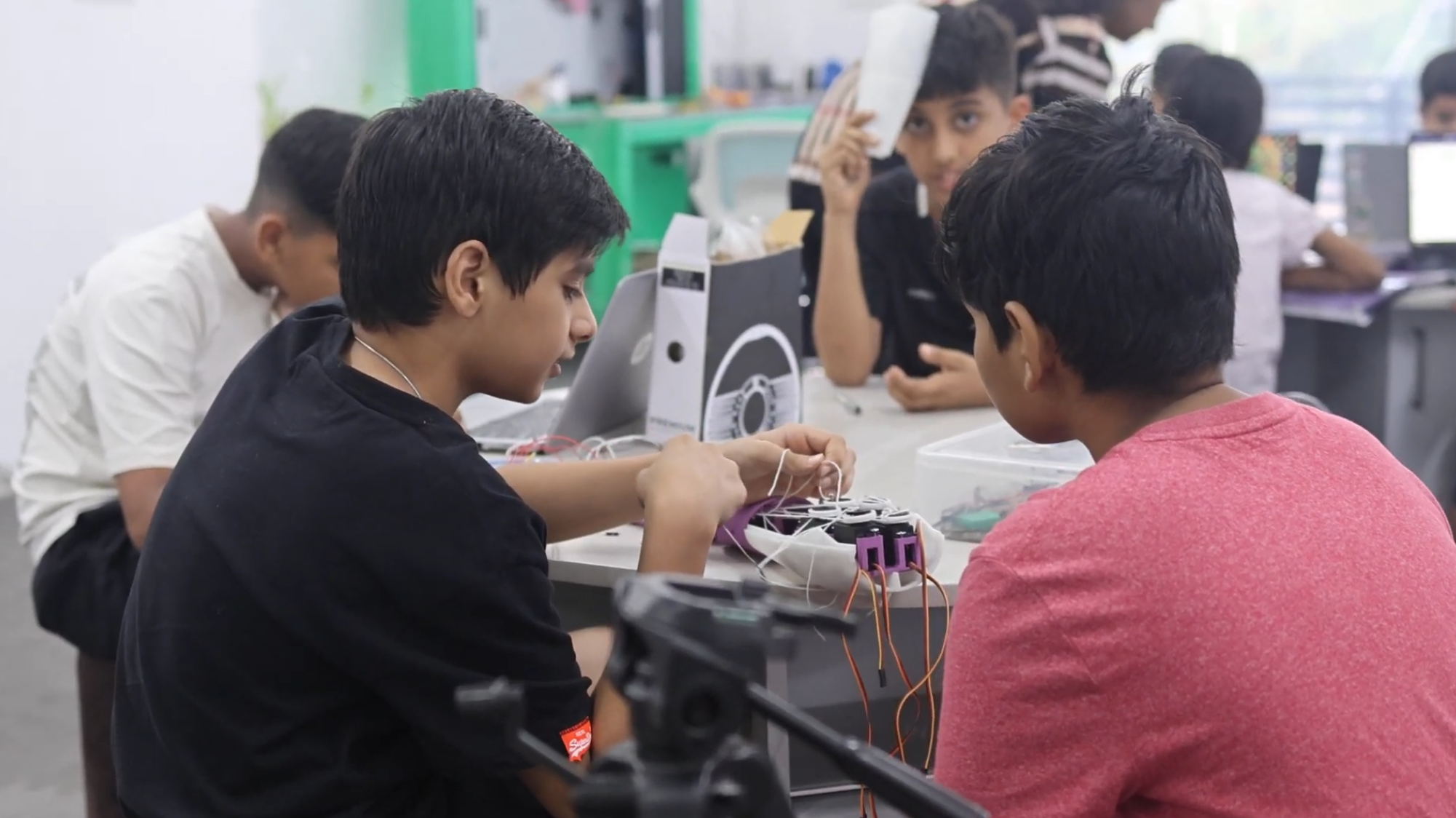
What MittyVerse Teaches in Their AI and ML Program
MittyVerse is a Gurugram-based STEAM learning centre located in Sector 85, Sikandarpur Road. Their AI and ML program is structured around one core idea: students learn AI by building with it, not by watching someone else explain it.
The program covers four distinct tracks. Younger students start with Generative AI, working with tools like ChatGPT APIs, DALL-E, and Stable Diffusion to understand how AI creates content. The AI track introduces rule-based systems, decision trees, and NLP pipelines, building logical thinking before moving to data. The ML track is where students get their hands on scikit-learn, pandas, and NumPy, training real classification and regression models on actual datasets. Advanced students work on Agentic AI, building systems that can reason, plan, and execute multi-step workflows using tools like LangChain and RAG pipelines.
The program is recommended for ages 12 and above, runs for 4 hours per week, and is available both online and offline. Fees start at Rs. 6,999 per month for the Innovator level. There is a free demo class available for parents who want to see the teaching style before committing.
How to Evaluate Any AI Program Before You Enroll
Here are the questions worth asking directly. A good program will answer all of them without hesitation.
- What tools and libraries do students actually use? Python, scikit-learn, TensorFlow, LangChain, or actual APIs are the right answers. Vague answers like 'cutting-edge technology' are not.
- What does the final project look like? Students should have a portfolio-worthy output, not a certificate and a PDF.
- What is the instructor's background? Industry experience matters here. An instructor who has only taught students does not bring the same depth as one who has worked on real AI systems.
- How small are the batches? MittyVerse maintains 12 to 15 students per batch. That is the kind of ratio where individual feedback is actually possible.
- Can I sit in on a demo class? Any program that says no to this is not confident in what they deliver.
One more thing: ask about what happens when a student gets stuck. The answer tells you everything about the teaching philosophy.
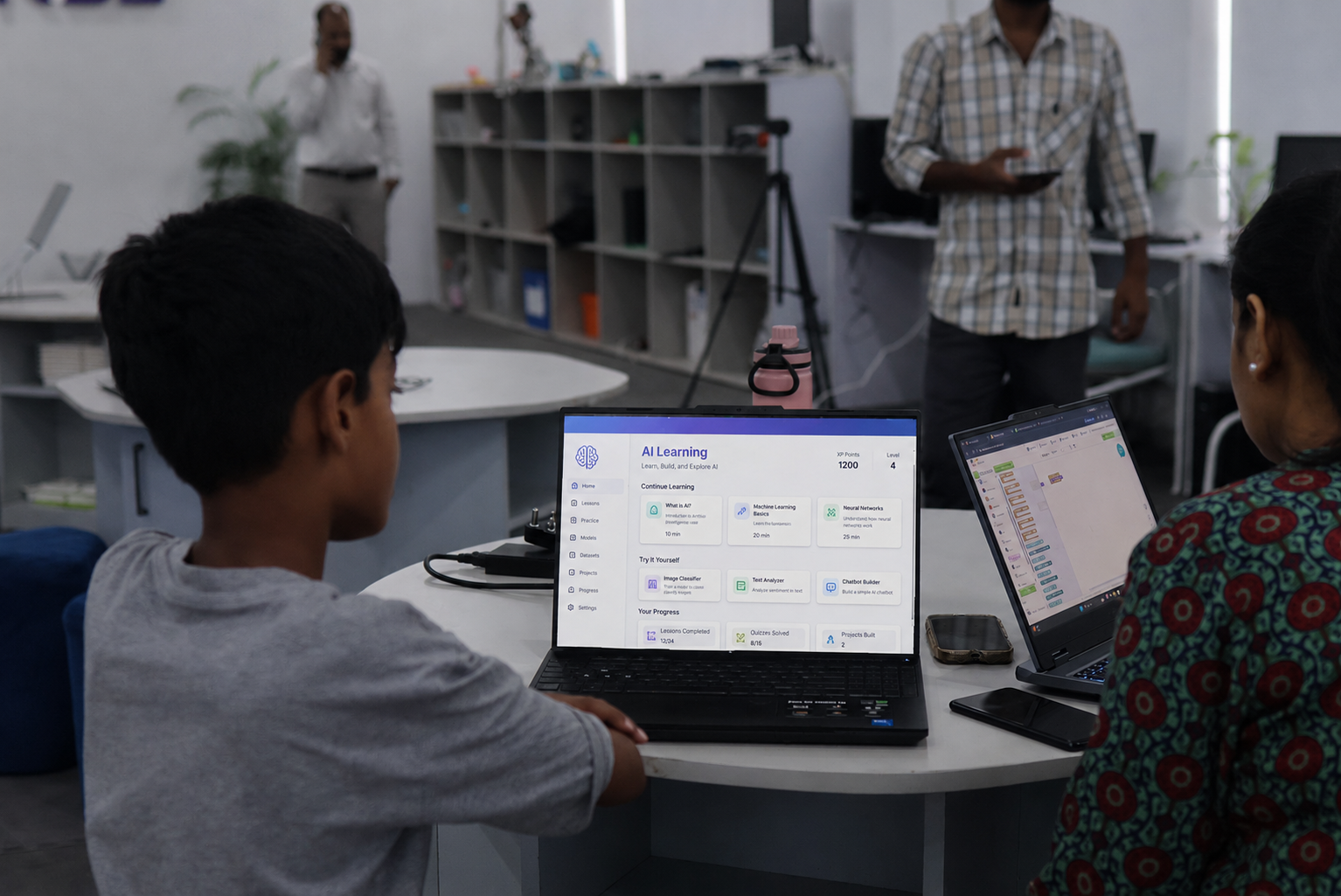
AI Education in Gurugram: What the Bigger Picture Looks Like
India's National Education Policy 2020 explicitly calls for coding and computational thinking to be introduced from Grade 6 onward. The World Economic Forum's Future of Jobs Report identifies AI and machine learning as among the fastest-growing skill areas globally, with demand expected to increase by 40% through 2027.
Gurugram sits at the centre of India's tech economy. Major AI research labs, startups, and multinational technology companies are all operating within 10 kilometres of where your child goes to school. The proximity matters. A student who builds AI skills here has access to internship pipelines, competition circuits, and mentorship networks that most cities in India simply do not have.
Starting at 12 with a serious AI education means, by 17, your child could have a project portfolio, competition wins, and a level of practical knowledge that most engineering undergraduates do not. That is not an exaggeration. It is what structured, well-paced learning over five years produces.
Summer Camp: The Fastest Way to Start
If your child has never tried an AI or STEAM program before, MittyVerse's AI Summer Camp 2026 is the lowest-risk way to find out if it clicks. Batches run through June, with two-hour sessions in the morning for ages 6 to 12, and afternoon sessions for ages 12 and above. The curriculum covers prompting, basic ML concepts, and a hands-on build project.
It is five days. It costs far less than a full program. And it gives both you and your child a clear picture of whether this is something worth pursuing seriously.
Frequently Asked Questions
The Right Time to Start Is Not Next Year
AI is not a future skill. It is a present one. The kids who are learning it now, seriously and hands-on, are building a four to five year head start on the ones who wait.
Gurugram has options. Not all of them are equal. What you are looking for is a program that teaches concepts, not just tools. That builds real projects. That has instructors who know the field, not just the syllabus.
If you want to see what that looks like in practice, book a free demo class at MittyVerse. No commitment. Just 45 minutes with your child and a real instructor, so you can judge for yourself.